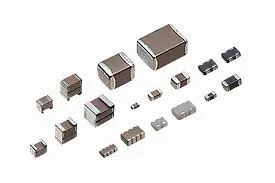
MLCC Selection Guide for Smartphones, Tablets & Laptops — Decoupling, Filtering & Power Management
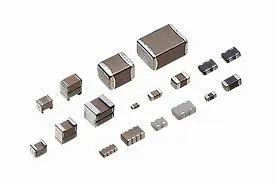
The Consumer Electronics Landscape — Why Capacitor Selection Matters Here
Smartphones, tablets, and laptops represent the highest-volume MLCC market in the world. A single flagship smartphone contains 800–1,200 MLCCs, while a laptop motherboard carries 1,500–2,500. These capacitors are packed into ever-shrinking PCB real estate, operating at low voltages (1V–20V) but under relentless pressure to be smaller, thinner, and cheaper — without sacrificing reliability.
The defining challenge in consumer electronics is density. With 0201 and 0402 packages occupying under 1 mm² of board space, placement, soldering, and thermal management all become more demanding. Yet the electrical requirements are no less strict: power rails on modern SoCs demand microsecond transient response, and MLCC decoupling is the first line of defense against voltage droop.
This guide focuses on the three dominant consumer platforms — smartphones, tablets, and laptops — and provides a practical framework for selecting the right MLCC at each position in the design. We cover package selection, dielectric choice, DC bias derating, and the most commonly used part number series from major brands.
Package Size Strategy — 0201, 0402, and 0603 in Consumer Design
0201 (0.25 × 0.125 mm): The smallest widely available MLCC package, now standard in flagship smartphones and high-end laptops. Used almost exclusively for high-speed digital decoupling where every fraction of a millimeter matters — think application processor core rails, LPDDR5 memory termination, and MIPI CSI/DSI signal lines. Typical specs: X5R/X6S, 4V–10V, 0.1 µF–2.2 µF. Note that 0201 placement requires precision pick-and-place and laser-based AOI — not every assembly house can handle them reliably.
0402 (0.4 × 0.2 mm): The sweet spot for most portable consumer designs. 0402 is small enough for dense layouts yet manufacturable with widely available SMT lines. Dominant use cases: PMIC input/output decoupling, wireless charging TX/RX resonance, Wi-Fi/Bluetooth module bypassing, and DDR termination. The 0402 footprint dominates the 16V/25V/50V range at 100 nF–10 µF and accounts for the majority of MLCC shipments into the wireless charging segment. If your design can accept the footprint, 0402 almost always offers the best cost-per-capacitance ratio in the sub-10 µF range.
0603 (0.6 × 0.3 mm): Used where higher capacitance or higher voltage is needed and the layout has room — bulk decoupling for battery rails, USB PD 20V input filtering, audio codec supply bypassing, and SSD power management in laptops. 0603 X5R/X7R capacitors in the 10 µF–47 µF range at 4V–25V serve as the main storage reservoir after the battery buck converter. At 100V ratings, 0603 X7R also handles backlight LED driver output filtering in tablet and laptop LCD panels.
Dielectric Selection — X5R, X6S, X7R, and When to Use C0G
X5R (-55°C to +85°C, ±15%): The default dielectric for consumer electronics. X5R delivers the highest capacitance density in small packages, making it ideal for decoupling processors, GPUs, PMICs, and memory rails. The 85°C upper limit is acceptable for all consumer devices — even laptops rarely exceed 70°C at the PCB surface. X5R at 4V and 6.3V ratings covers the majority of sub-5V digital rails.
X6S (-55°C to +105°C, ±22%): A newer dielectric that bridges the gap between X5R and X7R. X6S offers better temperature performance than X5R while maintaining higher capacitance density than X7R. Increasingly used in tablet and laptop power rails near the CPU/GPU where board temperatures can spike during sustained workloads. Also common in fast-charging circuits where the USB PD controller area runs hotter.
X7R (-55°C to +125°C, ±15%): Used in consumer electronics where thermal margin is needed — wireless charging coils, display backlight drivers, and any circuit near the battery charging path. X7R costs slightly more than X5R but provides peace of mind in thermally challenging locations. Strongly recommended for all 0603 power decoupling above 10 µF.
C0G/NP0 (±30 ppm/°C, near-zero drift): Reserved for precision timing, RF matching, and clock oscillator circuits. In smartphones, C0G 0402 capacitors at 1 pF–100 pF are critical in the RF front-end (antenna matching, bandpass filters) and in the crystal oscillator circuits for Wi-Fi, Bluetooth, and cellular modems. C0G capacitance is limited to the pF–low nF range, so it cannot replace X5R/X7R for power decoupling.
Voltage Derating & DC Bias — The Consumer Electronics Trap
The most common mistake in consumer electronics MLCC selection is insufficient DC bias derating. X5R and X6S dielectrics can lose 50–70% of their rated capacitance under DC bias approaching the rated voltage. A 10 µF, 6.3V, 0402 X5R capacitor may deliver only 3–4 µF of actual capacitance on a 5V rail. Designers must check the manufacturer's DC bias curve for every capacitor on every rail — never assume the nominal value.
Rule of thumb for consumer designs: For power rail decoupling, size your MLCC so the nominal rating is 2–3× the actual rail voltage. A 1.8V core rail should use 6.3V rated capacitors. A 5V USB rail should use 10V or 16V rated capacitors. This provides adequate effective capacitance after derating and margin for voltage transients.
Voltage rating table for common consumer rails:
- 0.8V–1.2V (SoC core): 4V or 6.3V X5R
- 1.8V–3.3V (I/O, memory): 6.3V or 10V X5R
- 5V (USB, audio): 10V or 16V X5R/X7R
- 12V–20V (USB PD, charging): 25V or 35V X7R
- Display backlight (20V–40V): 50V or 100V X7R
Recommended Brands & Part Number Series for Consumer Electronics
Murata: The market leader in small-case MLCCs. The GRM series (general-purpose X5R/X7R) is the de facto standard for 0201/0402 decoupling in smartphones. For ultra-thin designs, Murata's GRT series offers low-profile packages. The GCM series provides automotive-grade quality at near-commercial pricing — worth considering for premium laptop designs where reliability is a brand differentiator.
TDK: The C series (commercial grade) and CGA series (automotive grade) cover the full consumer spectrum. TDK's strength is in the 0402/0603 X7R range at 25V–100V — ideal for USB PD and display backlight filtering. TDK C-series 0201 capacitors are widely second-sourced alongside Murata in flagship phone designs.
WALSIN (华新科) and YAGEO (国巨): Taiwanese manufacturers offering competitive pricing for high-volume consumer designs. WALSIN's 0201/0402 X5R and YAGEO's CC series are popular choices for cost-sensitive tablet and mid-range smartphone designs where every cent of BOM cost matters. Both offer performance comparable to Murata/TDK for standard decoupling applications.
FH (风华) and Samsung: FH is a leading Chinese brand with strong cost competitiveness in 0402/0603 X5R — widely used in domestic tablet and laptop ODM designs. Samsung's CL series offers a middle ground between Japanese quality and Taiwanese pricing, particularly strong in the 0603 10 µF–22 µF range used for laptop power management.
Quick-Reference Part Number Table — Consumer Electronics
| Application | Package | Voltage | Capacitance | Dielectric | Recommended Series | |------------|---------|---------|------------|------------|-------------------| | SoC Core Decoupling | 0201 | 4V | 0.1 µF | X5R | Murata GRM, TDK C | | SoC Core Decoupling | 0201 | 4V | 1 µF | X6S | Murata GRM, TDK C | | PMIC Output | 0402 | 6.3V | 10 µF | X5R | Murata GRM, WALSIN | | DDR5 Termination | 0402 | 4V | 0.22 µF | X5R | Murata GRM, YAGEO CC | | Wireless Charger RX | 0402 | 25V | 100 nF | X7R | Murata GRM, TDK C | | USB PD 5V Rail | 0402 | 16V | 2.2 µF | X7R | TDK C, Samsung CL | | Battery Rail Bulk | 0603 | 10V | 22 µF | X5R | Murata GRM, Samsung CL | | Audio Codec Bypass | 0402 | 6.3V | 4.7 µF | X5R | Murata GRM, WALSIN | | LCD Backlight Output | 0603 | 50V | 100 nF | X7R | TDK C, YAGEO CC | | MIPI DSI Filtering | 0201 | 6.3V | 0.47 µF | X5R | Murata GRM, TDK C | | Wi-Fi/BT Antenna Match | 0402 | 25V | 1.5 pF | C0G | Murata GJM, TDK C | | USB PD 20V Input | 0603 | 35V | 10 µF | X7R | TDK C, Murata GRM |
Common Design Pitfalls & Real-World Cases
Pitfall 1 — Ignoring DC Bias in PMIC Decoupling: A hardware team selected 4.7 µF, 6.3V, 0402 X5R capacitors for the output of a PMIC buck converter on a tablet SoC rail (1.1V). With the low DC bias at 1.1V, the effective capacitance was close to nominal — but on the 3.3V rail using the same capacitor, effective capacitance dropped to ~2.5 µF. The resulting higher ripple caused SoC stability issues that took weeks to debug. Lesson: Always check the DC bias curve per rail, not just the capacitor datasheet front page.
Pitfall 2 — 0201 Assembly Yield Without Proper Process Control: A mid-range smartphone ODM switched from 0402 to 0201 for processor decoupling to save board area. The first production batch had 3% tombstoning defects because the pick-and-place machine hadn't been recalibrated for 0201, and the stencil aperture wasn't optimized for the smaller pad geometry. Lesson: 0201 adoption requires process validation — don't treat it as just a smaller 0402.
Pitfall 3 — Acoustic Noise in Tablet Displays: A tablet design experienced audible buzzing from the LCD backlight circuit. Investigation revealed that the X7R MLCCs in the boost converter were exhibiting piezoelectric vibration at the PWM switching frequency. Switching to capacitors with soft-termination or adding a small series resistor damped the resonance. This is a well-known MLCC behavior — X7R's barium titanate ceramic is inherently piezoelectric, and in audio-frequency switching circuits, this can couple mechanically into the chassis.
Pitfall 4 — Capacitor Count Reduction to Save BOM Cost: A laptop motherboard design reduced the number of 0402 decoupling capacitors per rail from the reference design's recommended count to save $0.12 per board. The resulting higher power rail impedance led to intermittent DDR training failures at cold boot. The fix added back the capacitors and cost significantly more in re-spin and delayed launch than the original BOM savings. Lesson: Decoupling capacitor count is set by impedance targets, not by BOM optimization.
Related Products & Further Reading
Browse Movthing's capacitor catalog for consumer electronics parts:
- Murata MLCC Capacitors — GRM series for 0201/0402/0603
- TDK MLCC Capacitors — C series for consumer applications
- Samsung MLCC Capacitors — CL series, strong in 0603
- WALSIN MLCC Capacitors — Cost-competitive 0201–0603
- YAGEO MLCC Capacitors — CC series for consumer designs
Next in this series: MLCC Selection for Wearables: TWS, Smartwatches & IoT Sensors — covering the unique challenges of ultra-compact, battery-powered wearable devices.